Tired of 'I don’t have time for my hobbies'? This platform helped me rediscover joy—without the guilt
We’ve all been there—wanting to paint, play guitar, or learn photography, but life gets in the way. I used to say, “I’ll start when things slow down,” but they never did. Then I found a simple online space where real people share small wins, easy tips, and “messy” progress—not perfection. It didn’t just teach me skills; it gave me permission to enjoy them. This is for anyone who loves learning but struggles to make room for it.
The Hidden Cost of Putting Hobbies on Hold
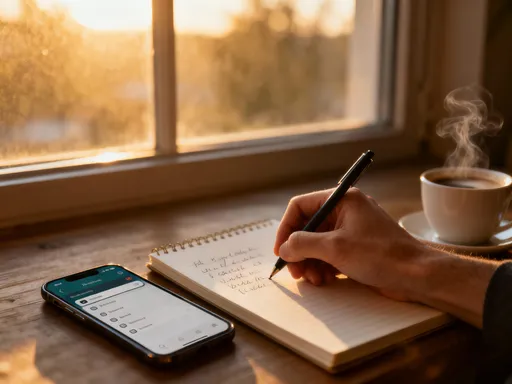
For years, I told myself that hobbies were for weekends, vacations, or some imaginary future when the house was spotless, the kids were grown, and I finally “had time.” In the meantime, I tucked away my sketchbook, let my guitar collect dust, and scrolled past online art classes with a quiet ache. I thought I was being responsible—focusing on work, family, meals, and schedules. But over time, something subtle shifted. I didn’t just miss painting. I missed feeling like me.
What I didn’t realize then was that skipping hobbies isn’t just about missing fun. It chips away at our mental energy, our mood, and even our ability to handle daily stress. Studies show that engaging in creative activities—even just 10 to 15 minutes a day—can reduce anxiety, improve focus, and boost emotional resilience. But I wasn’t thinking about science. I was just feeling… flat. Like I was going through the motions of being a good mom, a reliable employee, a dependable friend, but not really living.
Then one evening, my niece came over with a small watercolor set. “Auntie, let’s paint something together!” she said, eyes bright. I froze. I hadn’t painted in nearly a decade. What if I was terrible? What if I ruined her fun? I almost said no. But something in her excitement nudged me. So we sat at the kitchen table, and I fumbled with the brush, mixing colors too heavily, letting the paper warp. But she didn’t care. “Yours looks like a stormy sunset!” she said, grinning. And in that moment, I remembered how good it felt—to create something just because it made me happy. No grades. No expectations. Just joy.
That night, I asked myself: Why had I waited so long to do something that brought me so much peace? Why did I treat creativity like a reward for being “done” with everything else—when I’d never be done? That question started my journey toward finding a better way to bring hobbies back into my life, not as a luxury, but as a necessity.
How Life Gets in the Way (And Why We Believe It)
Let’s be honest: life is full. Between managing a household, helping kids with school, keeping up with work, and just keeping the lights on, the idea of “me time” can feel like a guilty indulgence. I used to believe that if I wasn’t exhausted by bedtime, I hadn’t done enough. And if I spent even 20 minutes sketching, I’d hear that quiet voice: Shouldn’t you be folding laundry? Didn’t you promise to clean the pantry? It wasn’t anyone else judging me. It was me—holding myself to an impossible standard.
We’ve all heard the phrase “work-life balance,” but for many of us, it feels like a myth. The truth is, most of us aren’t lacking time—we’re lacking support. We’re told to “just make time,” as if motivation is a light switch we can flip on. But willpower fades. Schedules change. Kids get sick. And when we rely only on motivation, we set ourselves up to fail.
I tried every method: scheduling hobby time on Sundays (but then the weekend felt like another to-do list), buying fancy supplies (which just made me feel guilty for not using them), and even signing up for online courses (which I never finished). Each attempt ended the same way—another reminder of how “bad” I was at following through. I wasn’t lazy. I was just using tools that didn’t fit my real life.
Everything changed when I stopped chasing motivation and started looking for community. I realized I didn’t need more discipline—I needed connection. I needed a space where learning wasn’t about performance, but about progress. That’s when I discovered an online platform built not for experts, but for people like me—busy, imperfect, and eager to grow. It wasn’t flashy. No celebrity instructors. No promises of mastery in 30 days. Just real people sharing real journeys. And for the first time, I felt like I belonged.
Finding My Tribe: Learning with Real People, Not Experts
Before this, my idea of learning online was watching polished videos—perfect brushstrokes, flawless results, and a calm voice saying, “And just like that, you’ve created a masterpiece.” I’d close the tab feeling inspired but also defeated. My lines are shaky. My colors are muddy. I’ll never look like that. It wasn’t the teacher’s fault. But those videos made creativity feel like a performance, not a practice.
What I found on this platform was different. Instead of perfection, I found honesty. A woman posted her first attempt at calligraphy: shaky letters, ink smudges, and a caption that said, “I’m 58 and never thought I’d try this. It’s messy, but I’m proud.” Another user shared a photo of a lopsided clay bowl with the words, “My third try. Still not round, but it holds soup!”
These weren’t highlights. They were real moments. And seeing them made me feel seen. I realized I wasn’t alone in my frustration, my self-doubt, or my slow progress. This wasn’t a competition. It was a community of people showing up, trying, and supporting each other.
I started small. I uploaded a photo of a simple pencil sketch—just a coffee cup, nothing special. I hesitated before posting. What if people laugh? What if they say it’s bad? But I clicked “share” anyway. Within minutes, I got comments: “Love the shading!” “You’re capturing light so well!” “Keep going—this is beautiful progress.” No judgment. Just kindness. And something shifted in me. The fear of “doing it wrong” began to loosen its grip. I wasn’t here to impress anyone. I was here to grow.
Over time, I started commenting on others’ posts, asking questions, celebrating their wins. I learned that asking, “How did you mix that color?” or “What kind of brush do you use?” wasn’t silly—it was how we learned together. This wasn’t just a learning platform. It was a circle of encouragement, and I was finally letting myself step in.
How Shared Knowledge Turns Frustration into Flow
One of my biggest frustrations with watercolor was how the paint would bleed and blur. I’d try to paint a simple flower, and the petals would turn into a watery mess. I’d get frustrated, set it aside, and weeks would pass before I tried again. It felt like I was stuck in the same loop—excited to start, then defeated by the details.
Then I posted a photo of one of my failed attempts, with the caption: “I love watercolor, but I can’t control the water. Any tips?” I didn’t expect much. But within hours, three people responded. One said, “Try loading less water on your brush.” Another shared a quick video of how she dries her brush on a paper towel before applying color. A third suggested using thicker paper to prevent warping.
I tried their advice the next day—and it worked. The colors stayed where I wanted them. The painting wasn’t perfect, but it was mine, and I felt a spark of pride. That moment taught me something powerful: learning doesn’t have to be lonely. When we share our struggles, we open the door for others to help us through them.
What makes this platform different is how it turns isolated frustration into shared problem-solving. Instead of giving up when I hit a wall, I now know I can ask—and someone will answer. It’s not about finding the “right” way to do something. It’s about discovering what works for me, with the support of people who’ve been there.
I’ve also learned that small tips often make the biggest difference. Someone once told me to keep a paper towel under my hand while drawing to avoid smudging. Simple? Yes. Life-changing? For me, absolutely. These little pieces of wisdom, passed from one learner to another, add up. They don’t just improve my skills—they make the whole process feel lighter, more joyful, and less intimidating.
Building Habits Without Pressure or Perfection
My old approach to hobbies was all-or-nothing. I’d think, “If I can’t paint for an hour, why bother?” or “If I’m not getting better fast, I should just quit.” That mindset set me up for failure. I was measuring progress by results, not effort. And since I rarely had long stretches of free time, I rarely “qualified” to create.
What changed was learning to value consistency over perfection. On this platform, people don’t post only their best work. They post their daily doodles, their half-finished projects, their “ugly” first drafts. One woman shares a tiny sketch every morning with the caption, “Day 87: Still showing up.” Another posts a photo of her knitting every Sunday, even if she only added a few rows.
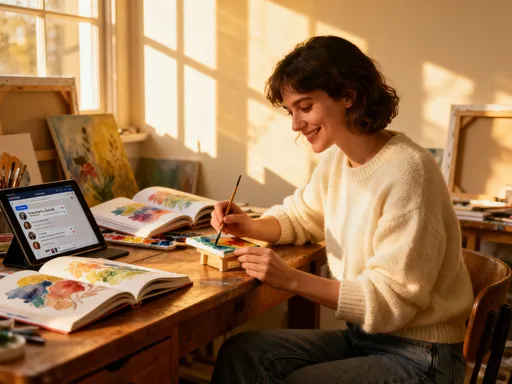
Seeing that kind of commitment—quiet, steady, unglamorous—inspired me. I realized I didn’t need big blocks of time. I needed small, regular moments. So I started with just 10 minutes a day. I set a timer. No pressure to finish anything. No goal except to show up.
At first, it felt silly. Ten minutes? What can I even do in that time? But over time, those minutes added up. I sketched a leaf. I mixed a new color. I practiced a single brushstroke. And because there was no pressure, I actually looked forward to it. I wasn’t doing it to produce something perfect. I was doing it to feel good.
The platform also has a simple check-in feature—just a button that says “I showed up today.” Clicking it feels small, but it builds momentum. It’s not about achievement. It’s about acknowledgment. And when I see others clicking it too, I feel part of something bigger. We’re not chasing mastery. We’re building a habit of showing up for ourselves.
From Hobby to Confidence: The Unexpected Gains
I didn’t expect painting to change how I feel at work or at home. But it has. When I take time to create, I come back to my daily responsibilities with more focus and patience. It’s like my brain gets a reset. I notice details more—the way light hits a window, the curve of a child’s smile. I think more creatively when solving problems, too. At a recent team meeting, I suggested a new way to organize our project tracker, and my boss said, “That’s such a fresh idea.” I realized it came from the way I’ve been experimenting with layout in my sketchbook.
But the biggest change has been in how I see myself. For so long, I defined my worth by how much I could do for others—how well I managed the household, how many tasks I checked off. Now, I’m learning to value myself for who I am, not just what I do. Taking time to paint isn’t selfish. It’s self-respect.
My daughter noticed the shift too. “Mom, you seem happier lately,” she said one evening. “You hum when you’re cooking.” I hadn’t even realized I was doing it. But she was right. Making space for my hobby didn’t just bring me joy—it softened my presence. I’m less reactive. More present. And I think my family feels it too.
What started as a way to learn watercolor has become a quiet act of self-renewal. It’s reminded me that growth isn’t just for kids or careers. It’s for all of us, at every stage. And sometimes, the most powerful changes begin with something as simple as picking up a brush—or a pencil, or a camera—and saying, “This matters to me.”
Why This Isn’t Just About Learning—It’s About Living
When I first joined this platform, I thought I was signing up to learn a skill. But what I’ve gained is so much more. I’ve found connection in a world that often feels isolating. I’ve found permission to be imperfect. And I’ve found a way to honor the parts of myself that aren’t about duty or productivity.
These online communities do more than teach techniques. They rebuild confidence. They remind us that we’re not alone. They create spaces where showing up—no matter how messy, slow, or small—is celebrated. And in doing so, they help us reclaim a fundamental truth: that joy isn’t a reward for finishing everything else. It’s a part of living well.
I used to think I needed to wait until life slowed down. But life doesn’t slow down. We just learn to move through it with more grace, more joy, and more of ourselves. This platform didn’t give me more time. It gave me a new way to use the time I already had.
If you’ve been putting off your hobby because you “don’t have time,” I get it. But what if you don’t need more time? What if you just need a little support, a little encouragement, and a place where it’s okay to be a beginner? What if you could start today—with just 10 minutes, one sketch, one try?
You don’t have to be perfect. You don’t have to have it all figured out. You just have to show up. Because the truth is, creativity isn’t a luxury. It’s a lifeline. And every small step you take toward what you love is a step toward a fuller, richer, more joyful life. You deserve that. And you’re worth the time.