Tracked 30 Family Dinners Using a Simple App: Here’s How We Became Better at Listening
Remember those quiet dinners where everyone’s half-looking at their phones? We were stuck in that cycle too—until we tried something small but game-changing. With just one simple app, our family conversations transformed. No more one-word answers. No more missing each other’s stories. This isn’t about screen time guilt; it’s about reclaiming connection. And honestly, the shift surprised us all. What started as a two-week experiment turned into a lasting habit. We didn’t just talk more—we began to truly listen. And in doing so, we found our way back to each other, one dinner at a time.
The Dinner Table That Lost Its Voice
There was a time when our dinner table felt like a room full of strangers. We’d sit down together—plates full, faces lit by the glow of phones—but the energy was flat. My daughter pushed peas around her plate while answering in grunts. My son barely looked up from his tablet. My partner would mutter a quick “fine” when asked about his day, then go back to scrolling. And me? I was the worst. I’d check work emails between bites, telling myself I was just “catching up.” But deep down, I knew we weren’t connecting. We were just sharing space, not lives.
It wasn’t always like this. There was a time when dinner was loud, messy, and full of laughter. We’d talk about school projects, weekend plans, funny things the dog did. But slowly, without us even noticing, the conversations faded. The silence grew heavier. I’d ask my daughter how her art class went, and she’d say “okay” and go back to her phone. I started wondering—was she really okay? Or had we just stopped knowing how to ask the right way?
One night, after yet another quiet meal, I looked around the table and felt a pang of sadness. We were all there, but no one was really present. That’s when I realized—we weren’t just losing dinner. We were losing each other. And I knew we had to do something. Not a big, dramatic change. Just something small that could bring the talking back. Something simple enough that we wouldn’t give up on it by week two. That’s how our journey began—not with a grand plan, but with a quiet decision to try.
Finding the Right Tool (Without the Tech Stress)
I’ll be honest—I didn’t want another tech fix that felt like homework. I didn’t need another app that tracked screen time or gave us points for good behavior. What I wanted was something that helped us talk, not something that made us feel worse about not talking. So I started looking for tools that were gentle, not pushy. Something that wouldn’t add stress, but reduce it.
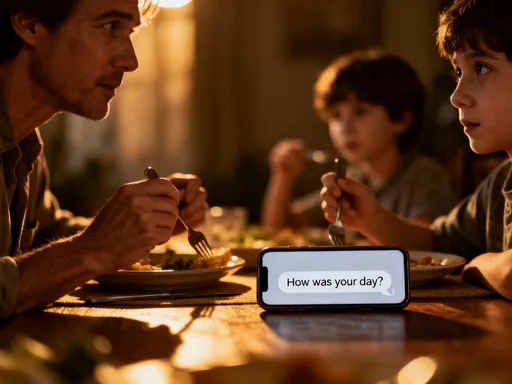
I tested a few different apps. One had a complicated setup and asked for too much personal data. Another felt like a game show, with timers and scores—fun for a night, but not sustainable. Then I found one that was different. It didn’t track us. It didn’t judge us. It just offered a simple question each night—something like “What made you smile today?” or “If you could have any superpower, what would it be?” And it did it quietly. No notifications, no flashing lights. Just a soft chime when we opened it at dinner.
The best part? It respected our privacy. Nothing was saved online. No data was shared. It was just for us. And that made a big difference. My daughter didn’t feel like she was being watched. My partner didn’t feel like he was being tested. It wasn’t about performance. It was about presence.
We started using it on a Tuesday—no big announcement, no pressure. I just opened the app, read the question out loud, and said, “Okay, who wants to go first?” My daughter looked up, surprised. Then she shrugged and said, “I’ll go.” And just like that, we began. No fanfare. No expectations. Just a question, and someone brave enough to answer.
How the App Changed Our Listening Habits
The biggest surprise wasn’t that we started talking more—it was that we started listening better. Before, when someone spoke, the rest of us were already thinking about our next comment or checking our phones. But the app had a rule: one person speaks, everyone else listens. No interrupting. No side conversations. Just full attention.
At first, it felt awkward. My son fidgeted. My partner kept glancing at his watch. I caught myself forming a response in my head before the person was even done. But slowly, something shifted. We began to notice things we’d missed before. The way my daughter’s voice lit up when she talked about her science project. The small pause my partner made before saying he was “fine,” like he was choosing his words carefully. The way my son’s eyes widened when he described a book he couldn’t put down.
Listening became an act of care. We weren’t just waiting for our turn to talk—we were really trying to understand. And that changed everything. When my daughter said she was nervous about a presentation, instead of saying “You’ll be fine,” I asked, “What part feels scary?” And she told me. Not just the facts—her fear, her worry, her hope. That night, I realized we weren’t just hearing words. We were hearing hearts.
The app didn’t teach us empathy. But it gave us the space to practice it. By slowing down and taking turns, we learned to be patient. To let silence sit. To let someone finish their thought without rushing in. And in that space, we found connection.
From Questions to Real Conversations
At first, we needed the prompts. “What’s one thing you’re proud of?” “If you could eat dinner with anyone, who would it be?” These questions were like training wheels—they helped us balance until we could ride on our own. But after a few weeks, something unexpected happened. We didn’t need the app to start talking. The habit had taken root.
One night, my son looked up and said, “I had a weird dream last night,” and just started telling us about it. No prompt. No reminder. Just a story he wanted to share. Another night, my daughter asked her dad, “Do you ever feel tired even when you haven’t done much?” And instead of brushing it off, he answered honestly. Those moments didn’t come from the app—they came from the culture we were building.
But here’s the thing—the app did track something interesting. It showed that our average response time—the time between when someone finished speaking and someone else responded—dropped from about eight seconds to under two. At first, I thought that meant we were reacting faster. But then I realized—it meant we were paying attention. We weren’t lost in thought. We weren’t distracted. We were present, ready to respond because we’d actually been listening.
And that made our conversations deeper. We started talking about things we used to avoid—school stress, friendship troubles, even small fears about the future. The table became a safe place. Not because we had all the answers, but because we had each other.
Kids Who Speak Up, Parents Who Stay Calm
My daughter used to be the quiet one. She’d sit through dinner, eating slowly, saying almost nothing. If we asked her a question, she’d give a one-word answer and look down. I worried she was unhappy. But the truth was, she just didn’t feel heard. And when you don’t feel heard, you stop trying to speak.
The app changed that. Because everyone got a turn, she knew she’d have space to talk. And because the rule was “no judgment,” she started to trust that her thoughts mattered—even the messy ones. One night, she shared that she’d been left out of a group chat at school. My first instinct was to get angry, to fix it, to call the teacher. But the app’s structure helped me pause. I took a breath and said, “That sounds really hard. Do you want to talk about it?” And she did. For ten minutes. Without stopping. And I just listened.
That moment taught me something important: being a good parent doesn’t always mean solving the problem. Sometimes, it means creating the space for your child to feel seen. And that night, she did. She didn’t need me to fix it—she needed me to hear it.
But it wasn’t just the kids who grew. I learned to slow down, too. To breathe before reacting. To ask, “Can you say more about that?” instead of jumping in with advice. And my partner? He started sharing more—little things, like how much he liked his new coffee mug, and big things, like how overwhelmed he felt at work. We weren’t just raising better listeners—we were becoming them.
Making It Stick: The Tiny Rules That Helped
Let’s be real—there were nights we wanted to skip it. Busy evenings. Tired kids. Leftover pizza eaten in front of the TV. But we made three simple rules, and they became our anchors.
First: phones in the basket. Not in pockets. Not on silent. In a little woven basket on the counter. It sounds small, but it made a huge difference. No glancing. No “just one quick text.” Just us. And when we stuck to it, the table felt calmer, lighter.
Second: one speaker at a time. We used a small wooden spoon as a “talking stick.” Whoever held it got to talk. No interruptions. No side comments. It kept things fair, especially when the kids argued over who got to go first. And honestly? It made us more patient. We learned to wait. To listen. To let someone finish.
Third: no skipping days. Not even on busy nights. We’d eat earlier, or later, or even in the living room—but we’d still do it. Because consistency built trust. The kids knew they’d have a chance to speak every night. And that made them more likely to open up.
There were bumps. One night, my son threw down the spoon and said, “This is stupid!” We didn’t punish him. We just said, “Okay. We’ll try again tomorrow.” And we did. Because it wasn’t about perfection. It was about showing up.
More Than Better Dinners: A Family That Grows Together
The changes didn’t stop at the dinner table. We started using our listening skills everywhere. On car rides. During weekend chores. Even in tough moments, like when we had to cancel a trip or when someone got sick. We weren’t perfect—but we were better. We paused before reacting. We asked questions before assuming. We stayed calm when we used to get loud.
But the biggest gift wasn’t better communication—it was deeper trust. My daughter now comes to me when something’s wrong, not because she has to, but because she wants to. My son shares his ideas without fear. My partner and I talk about things we used to avoid—money, plans, even our dreams. We’re not just sharing meals. We’re sharing lives.
And here’s the thing I didn’t expect: we started enjoying dinner again. Not because the food got better (though I did try a few new recipes). But because we were present. We laughed more. We listened more. We felt more like a family.
The app didn’t fix everything. Life is still messy. There are still arguments and missed connections. But now, we have a rhythm. A way back to each other. And that makes all the difference.
If you’re sitting at a quiet table, wondering how to break the silence, I’ll tell you this: start small. Try one question. One night. No pressure. Just a moment of connection. Because those moments add up. They build bridges. They heal gaps. And they remind us why we gather in the first place—not just to eat, but to be together.
Technology doesn’t have to pull us apart. Sometimes, when used with care, it can help us come back together. Not by replacing real connection, but by making space for it. And in a world that moves too fast, that might be the most valuable thing of all.